

Vows and Responsibilities
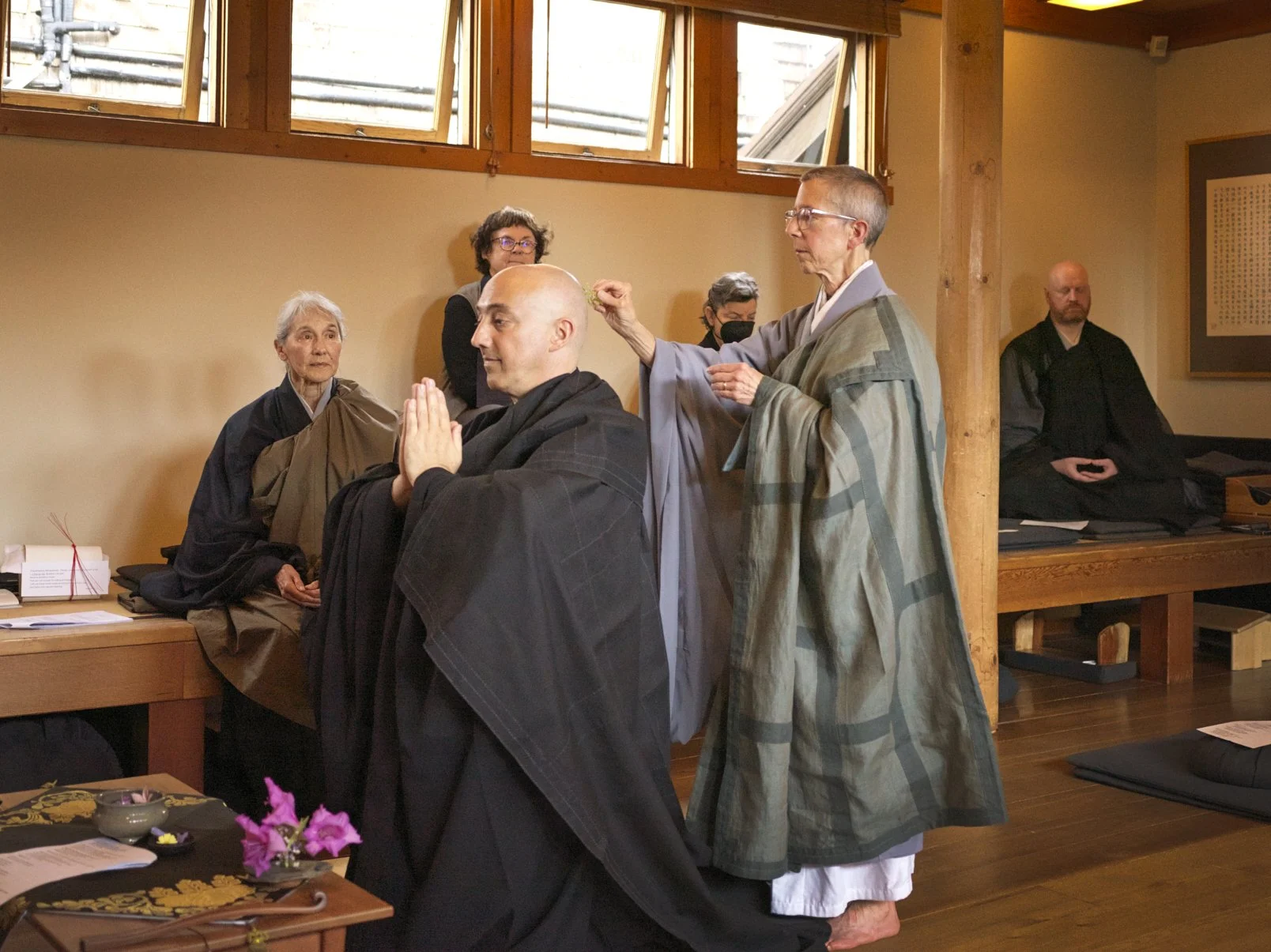
As a Sōtō Zen priest, I hold the Bodhisattva precepts as vows that shape my daily life, not just as ideas or ideals. The version I use here is the translation by Norman Fischer Roshi, whose language I find open hearted, grounded, and very accessible, especially for people who do not identify as Buddhist. These precepts name the kind of person I am training to be in the world and the spirit in which I hope to meet you. These are vows I undertake for myself, not expectations I place on anyone who comes to me for spiritual direction.
Beside them, I have written a set of Ethical Responsibilities that describe how I commit to show up in relationship with you. They are drawn from established ethical guidelines for spiritual directors, from conversations with my own teachers and mentors, from the organizations I belong to and feel affinity with, and from the public ethics statements of several major Dharma centers regarding clergy, staff, and volunteers. In other words, they are not just my personal preferences. They are my best effort to live the precepts in concrete, accountable ways, as a spiritual friend walking the path alongside you.
THE SIXTEEN BODHISATTVA PRECEPTS
-
I take refuge in Buddha (the principle of enlightenment within).
I take refuge in dharma (the enlightened way of understanding and living).
I take refuge in sangha (the community of beings).
-
I vow to avoid all action that creates suffering
I vow to do all action that creates true happiness.
I vow to act with others always in mind.
-
Not to kill but to nurture life.
Not to steal but to receive what is offered as a gift.
Not to misuse sexuality but to be caring and faithful in intimate relationships.
Not to lie but to be truthful.
Not to intoxicate with substances or doctrines but to promote clarity and awareness.
Not to speak of others’ faults but to speak out of loving-kindness.
Not to praise self at the expense of others but to be modest.
Not to be possessive of anything but to be generous.
Not to harbor anger but to forgive.
Not to do anything to diminish the Triple Treasure but to support and nurture it.
ETHICAL RESPONSIBILITIES
-
In spiritual direction, I begin from a simple commitment: you are the best and final authority on your own life and welfare. My role is not to make decisions for you, steer you toward my preferred outcome, or create dependence. Instead, I aim to offer steady companionship and careful listening that helps you hear your own experience more clearly and trust your own discernment. I also respect your freedom to hold your own beliefs and use your own language for the sacred, including uncertainty or no defined path at all.
-
I practice speech that aims to be timely, true, gentle, beneficial, and rooted in loving-kindness. I honor silence as part of wise speech, and I try not to rush to comment or interpret. I do my best not to use spiritual language as a weapon, a mask, or a shortcut, avoiding shaming, coercion, and spiritual bypassing. When it matters, I am willing to speak difficult truths, including naming harm or injustice, without abandoning gentleness or respect. If I'm unsure, I'll say so, and we can stay curious together.
-
Confidentiality is foundational to trust, and I treat what you share in spiritual direction as private, subject to the limits described here. To support good care, I may consult with my spiritual direction supervisor, my Zen teacher, or another qualified mentor. When I do, I protect your identity, avoid sharing details that could identify you, and disclose only what is necessary for consultation. Otherwise, I do not share what you tell me without your permission, except when required by law or when necessary to respond to an imminent risk of serious harm. Legal obligations may include reporting certain kinds of abuse or neglect. If disclosure becomes necessary, I will share only what is relevant and, whenever possible, involve you in the process and explain what I am doing and why.
-
I commit to ongoing formation and lifelong learning as part of ethical care, and I do not work in isolation. I receive supervision for spiritual direction, and I remain accountable within my priest training to my Zen Teacher. I regularly examine my own motivations, biases, and reactivity so they do not distort our work, and I pay attention to my own fitness to serve. I stay within my scope of practice: I am a spiritual director and a Sōtō Zen priest, not a psychotherapist or a Zen Teacher. I do not diagnose or provide treatment for mental health conditions. When concerns arise that are primarily clinical, medical, or otherwise beyond my scope of practice, I will encourage appropriate professional support and may recommend referral. I see referrals as compassionate care, not rejection, and my aim is always your well-being and the integrity of the work.
-
I recognize that spiritual direction can carry an imbalance of influence, even when offered as spiritual friendship. I make no claims of higher realization, special insight, or spiritual power, and I will not become a decision-maker for you or encourage dependence. I remain attentive to conflicts of interest that could compromise your well-being. If something feels coercive, confusing, or misaligned, I want you to name it, and I will take it seriously. You are free to end our work together at any time, without pressure or the need to justify your decision. When I miss something or cause harm, I commit to taking responsibility, seeking consultation when needed, and working toward repair.
-
I maintain clear relational, emotional, and physical boundaries so our work stays safe, respectful, and focused. A sexual or romantic relationship is never appropriate within spiritual direction or ministerial care, and I do not invite, initiate, or engage in sexual or romantic contact with directees, nor allow the relationship to move in that direction. I avoid dual relationships and other boundary crossings that could compromise your well-being, create confusion about roles, or interfere with the work. I do not use my position to meet my personal needs, including companionship, validation, emotional caretaking, or intimacy. If a boundary concern arises, I will address it directly and respectfully, and I will seek supervision or consultation as needed to protect the integrity of the relationship.
-
Spiritual direction is offered without a fee. Dana, or freely offered generosity, is never expected, required, or tied to access, attention, or availability. I am transparent about how dana is received and used, and I strive to be a good steward of any gifts. I commit to honesty in all dealings with money and remain attentive to how generosity can create feelings of obligation, leverage, or confusion. I honor your time as a gift as well, and I aim to be reliable, prepared, and present.
-
I welcome and respect people of all races, ethnicities, cultures, and nationalities; all gender identities and gender expressions; all sexual orientations and relationship configurations; all ages, bodies, abilities and disabilities, and neurodivergences; and people across class and immigration backgrounds. Spiritual direction is open to people of any faith, many faiths, or no faith, and I will not proselytize or pressure you toward my views. I work to create a space of safety, dignity, and belonging, where your lived experience is taken seriously. I recognize that I carry social privilege and blind spots, and I commit to noticing how those can affect what I assume, ask, or miss.